


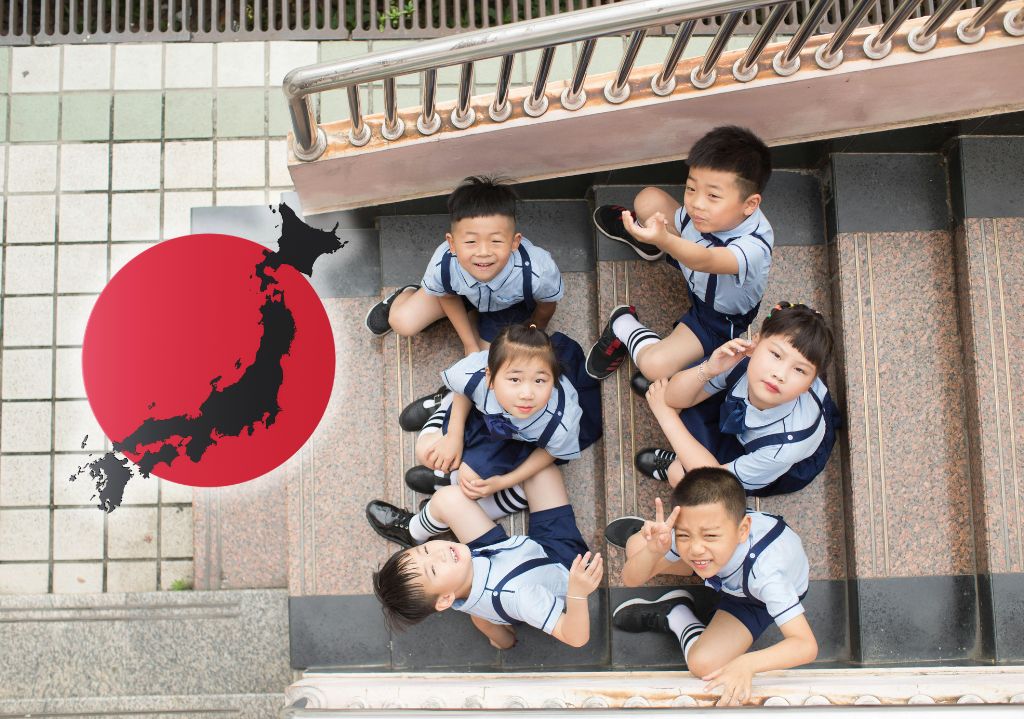
Japan is known for its unique blend of tradition and innovation. This balance is clearly visible in its education system. For international families, including those from the Netherlands and Belgium, Japan offers high-quality schooling options. But what does a typical school day look like? What cultural differences should families expect? And how can children keep up with their mother tongue and cultural education while abroad?
A well-structured and disciplined school day
In Japan, elementary education is compulsory from age six and lasts six years. Students typically attend neighborhood public schools that follow a standardized national curriculum designed by the Ministry of Education, Culture, Sports, Science and Technology (MEXT). A typical school day includes lessons in Japanese language, mathematics, science, social studies, and physical education. But what makes the Japanese system especially distinctive is what happens outside the academic curriculum.
Every school day also includes moral education and — uniquely — time for cleaning. Yes, students clean their own classrooms, hallways, and school grounds.
This practice isn’t just about cleanliness; it teaches responsibility, teamwork and respect for shared spaces.
The academic year starts in April and ends in March, and schools typically operate Monday through Friday, with some schools also having occasional Saturday classes. Homework is common, and academic pressure gradually increases as students move up through the grades.
A range of educational options for expatriates
While most local families enroll their children in public schools, expat families often choose between international schools and bilingual institutions. Tokyo, Osaka, and Yokohama are home to well-established international schools offering the IB, British, or American curricula. These schools provide instruction in English and serve a diverse student body. They are ideal for families seeking academic continuity and a familiar learning environment.
Based on Edufax’s experience, securing a place at international schools in Tokyo (a popular choice) can be challenging and requires careful advance planning.
Local Japanese schools are also open to foreign students, though the language barrier can be a challenge. Some expat families do opt for immersion in Japanese schools, particularly for younger children, as a way to foster integration and language acquisition.
A valuable option for globally mobile families
Because Montessori schools in the Netherlands follow the national curriculum, they are an excellent option for Dutch families returning from abroad or for international families temporarily living in the country.
Many Dutch Montessori schools have experience supporting children transitioning in and out of international systems.
Some offer bilingual programs or English-language support, depending on the region.
For expat families who are used to seeing Montessori as a private option, it can be refreshing to find that in the Netherlands, such schools are woven into the fabric of mainstream education. That said, spots at popular Montessori schools may be limited, especially in big cities like Amsterdam, The Hague and Utrecht. Early planning and local guidance are essential.
For Dutch-speaking families: keeping the mother tongue alive
For families temporarily relocating to Japan, maintaining Dutch language skills is essential, especially for children who may return to the Dutch or Flemish school system in the future. Yet neither local Japanese schools nor most international schools offer structured Dutch instruction. Without proactive support, there’s a risk of children falling behind in their native language.
That’s where Edufax’s NTC Online program (Dutch Language and Culture Education) comes in. This flexible, remote learning program supports Dutch-speaking children around the world — including those in Japan — to keep pace with the Dutch curriculum. Lessons are tailored to the child’s age, ability, and location, and taught by experienced Dutch teachers. The program runs parallel to the child’s main schooling, ensuring continuity, cultural connection, and future readiness.
Get in touch
Whether you’re moving to Japan for a short-term assignment or planning a longer stay, Edufax is here to support your family’s educational journey. We provide tailored advice on local and international school options, and ensure your children continue learning in their mother tongue, academically and culturally.
Curious how we can support your family abroad? Reach out to our experts at Edufax Consultancy or visit edufax.nl to learn more.